Ema of a Warrior Riding a Boar
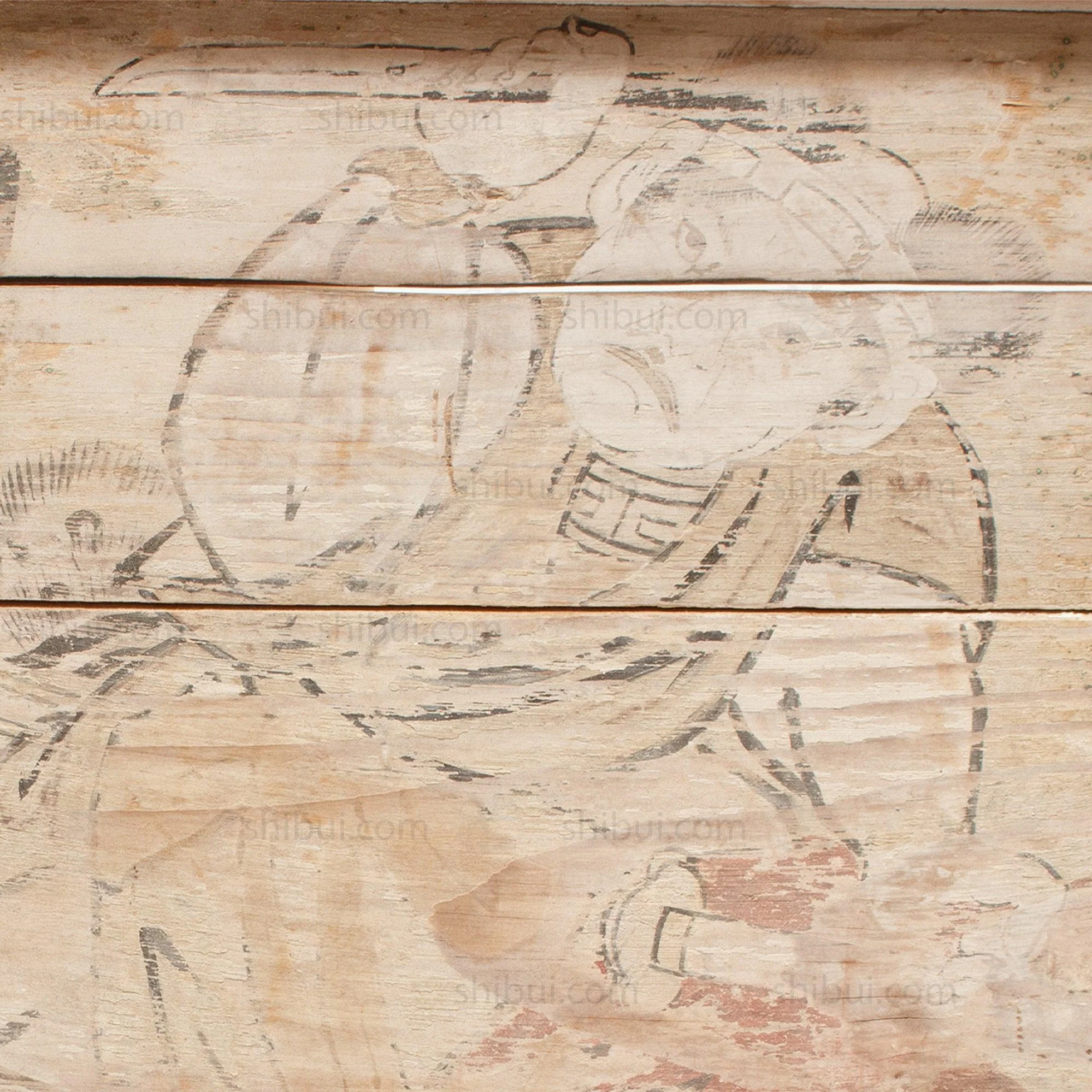
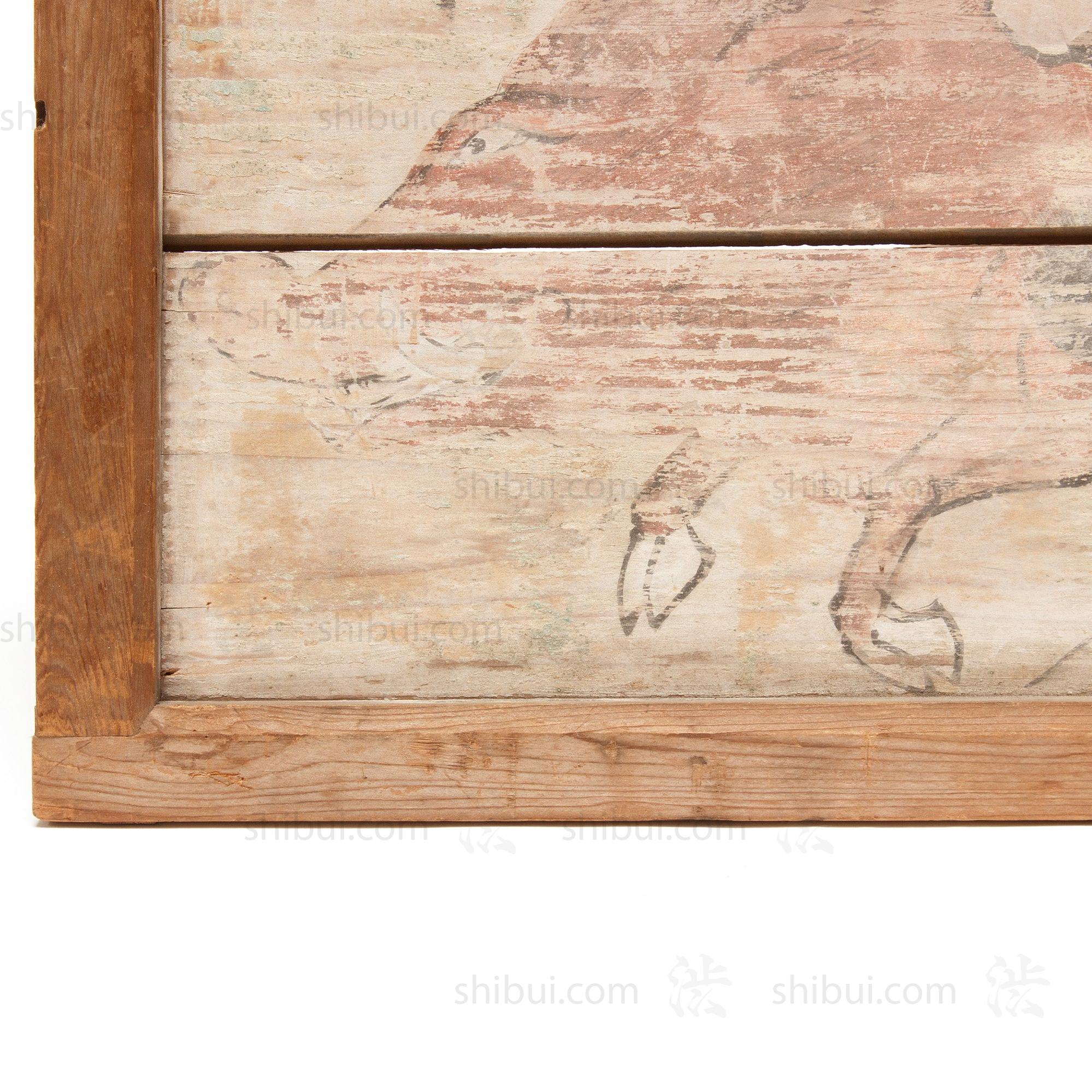
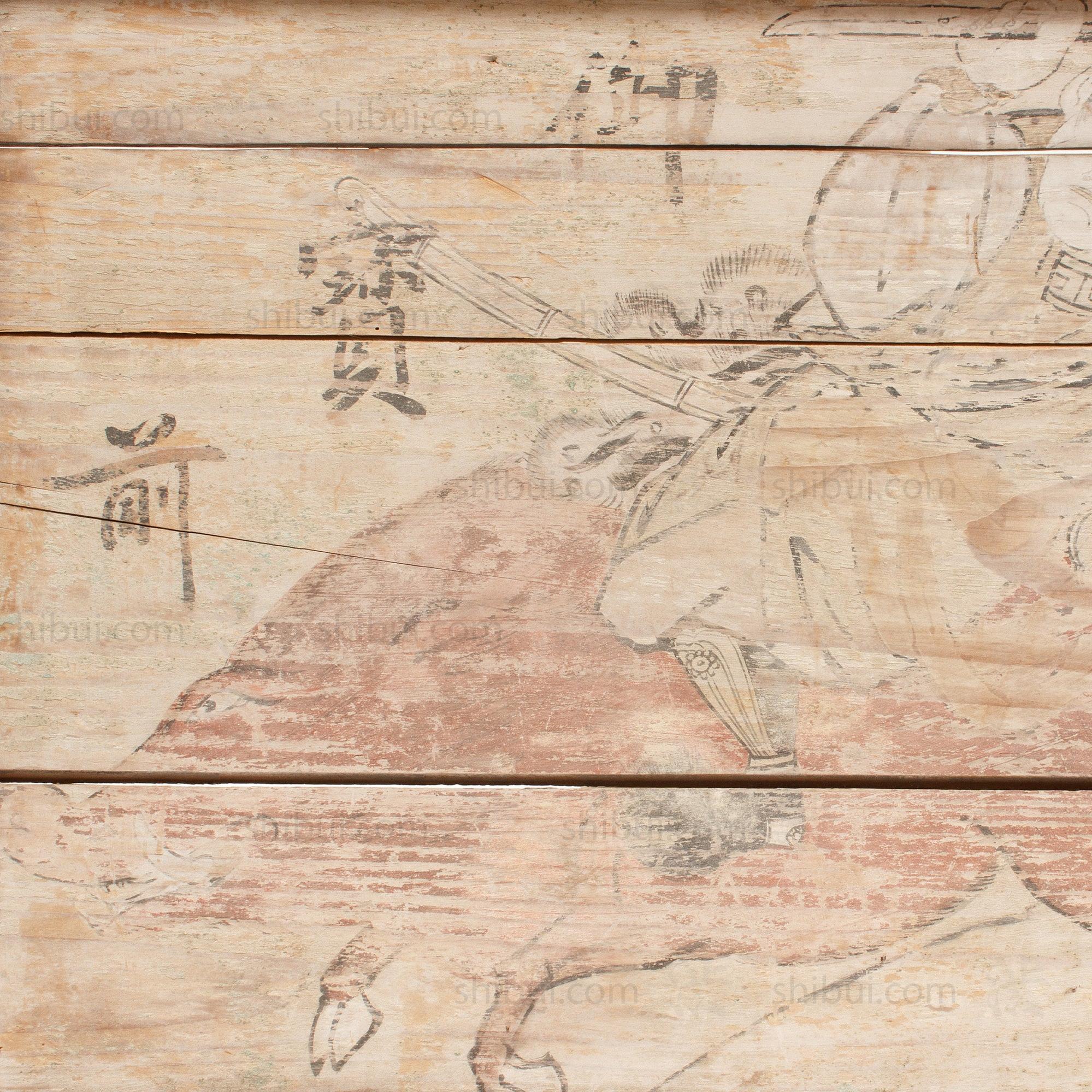
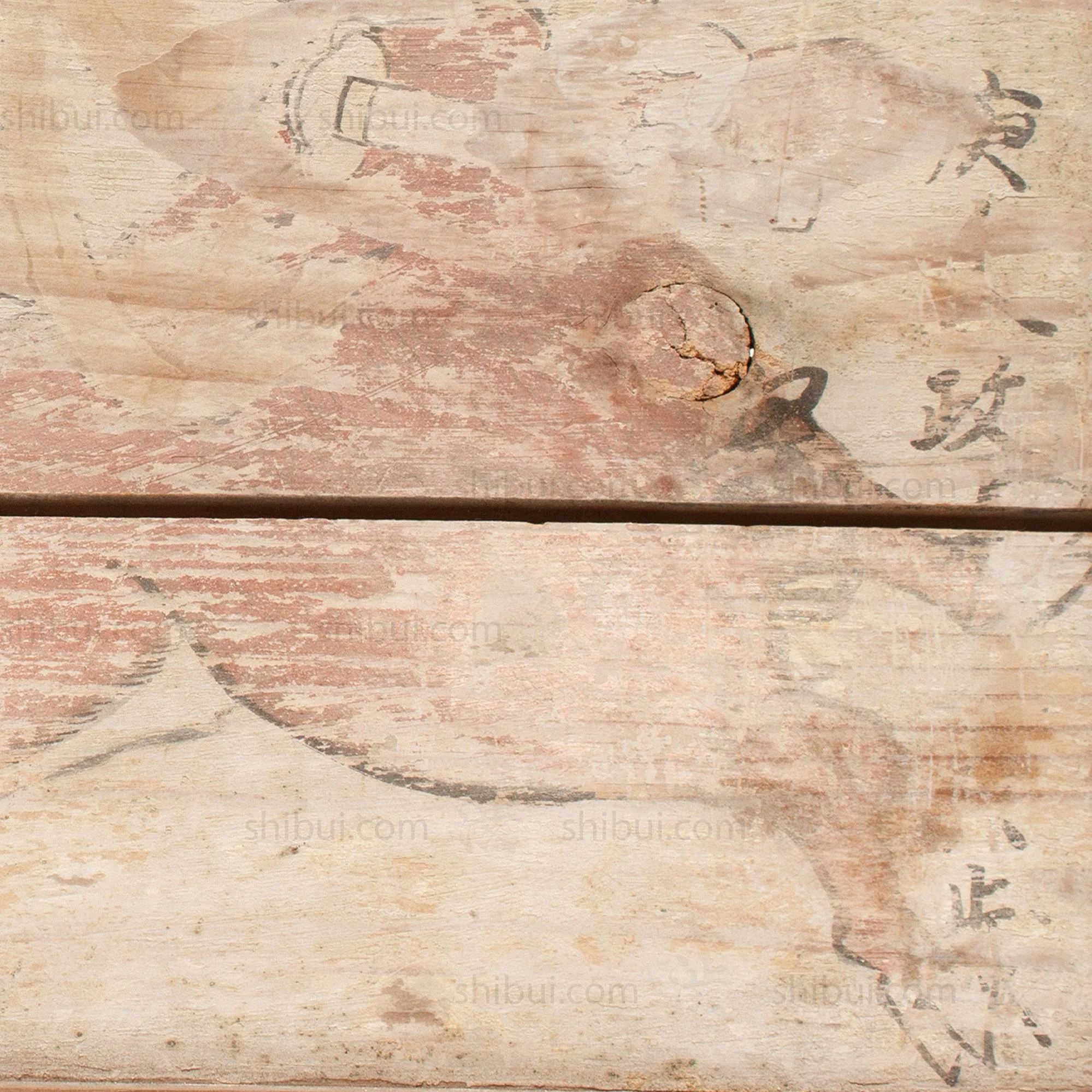
Hand painted Ema left at Shinto or Buddhist shrines for the deities to hear prayers. This ema of Nitta Shiro Tadatsune seated backwards on a boar, holding the boar's tail in one hand and his sword the other. "As related in the Tale of the Soga Brothers, during a grand hunting excursion at the foot of Mt. Fuji, an aged and massive wild boar cut through the shogun’s hunting party. Despite having several arrows protruding from its back, the beast was so enraged that no one dared approach it. Nitta no Shirō rode in pursuit, but the boar turned sharply, causing Nitta’s horse to rear". Aware that being on the ground could be fatal, Nitta used his bow to vault himself onto the boar’s back and stabbed it to death. The shogun praised his spirit and ability. "* The large characters in the upper left mean "go houzen," which is a phrase used to honor both gods and the Buddha. The characters on the right state that the ema is an offering, or "houken." The significance of the boar is most likely astrological, as the writing in the right column also states that the ema was created in the "year of the pig/boar."
- Mineral pigments and ink
- Sugi - Japanese cedar wood
- Dated January Taisho 10 (1922)
- 27.5" x 20.5" x 1" (width, height, thickness)
*from Indianapolis Museum of Art
Product Information
Product Information
Shipping & Returns
Shipping & Returns


Ema of a Warrior Riding a Boar
Ema of a Warrior Riding a Boar
Hand painted Ema left at Shinto or Buddhist shrines for the deities to hear prayers. This ema of Nitta Shiro Tadatsune seated backwards on a boar, holding the boar's tail in one hand and his sword the other. "As related in the Tale of the Soga Brothers, during a grand hunting excursion at the foot of Mt. Fuji, an aged and massive wild boar cut through the shogun’s hunting party. Despite having several arrows protruding from its back, the beast was so enraged that no one dared approach it. Nitta no Shirō rode in pursuit, but the boar turned sharply, causing Nitta’s horse to rear". Aware that being on the ground could be fatal, Nitta used his bow to vault himself onto the boar’s back and stabbed it to death. The shogun praised his spirit and ability. "* The large characters in the upper left mean "go houzen," which is a phrase used to honor both gods and the Buddha. The characters on the right state that the ema is an offering, or "houken." The significance of the boar is most likely astrological, as the writing in the right column also states that the ema was created in the "year of the pig/boar."
- Mineral pigments and ink
- Sugi - Japanese cedar wood
- Dated January Taisho 10 (1922)
- 27.5" x 20.5" x 1" (width, height, thickness)
*from Indianapolis Museum of Art
Product Information
Product Information
Shipping & Returns
Shipping & Returns
Description
Hand painted Ema left at Shinto or Buddhist shrines for the deities to hear prayers. This ema of Nitta Shiro Tadatsune seated backwards on a boar, holding the boar's tail in one hand and his sword the other. "As related in the Tale of the Soga Brothers, during a grand hunting excursion at the foot of Mt. Fuji, an aged and massive wild boar cut through the shogun’s hunting party. Despite having several arrows protruding from its back, the beast was so enraged that no one dared approach it. Nitta no Shirō rode in pursuit, but the boar turned sharply, causing Nitta’s horse to rear". Aware that being on the ground could be fatal, Nitta used his bow to vault himself onto the boar’s back and stabbed it to death. The shogun praised his spirit and ability. "* The large characters in the upper left mean "go houzen," which is a phrase used to honor both gods and the Buddha. The characters on the right state that the ema is an offering, or "houken." The significance of the boar is most likely astrological, as the writing in the right column also states that the ema was created in the "year of the pig/boar."
- Mineral pigments and ink
- Sugi - Japanese cedar wood
- Dated January Taisho 10 (1922)
- 27.5" x 20.5" x 1" (width, height, thickness)
*from Indianapolis Museum of Art